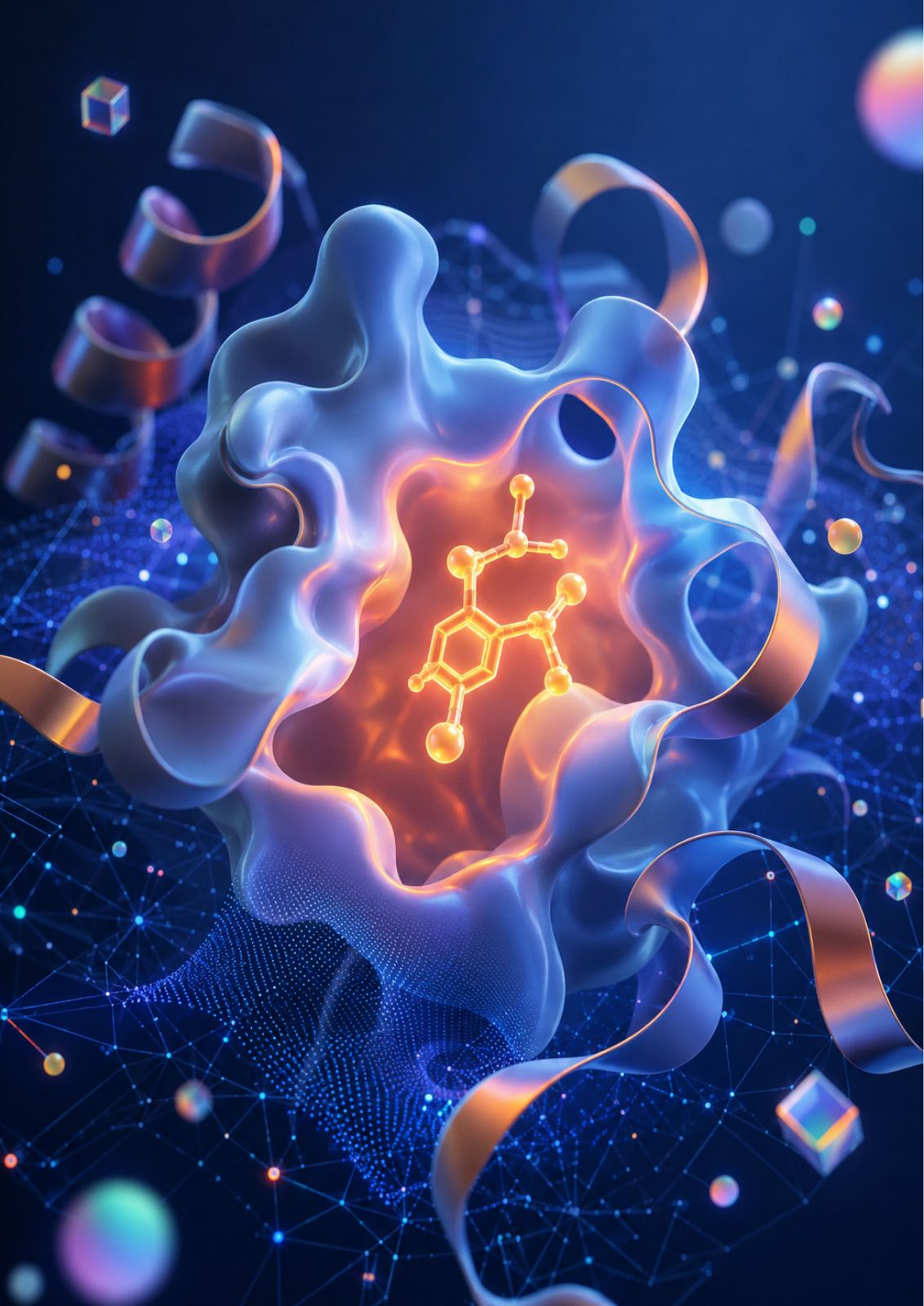
Tap image to enlarge이미지를 누르면 크게 볼 수 있습니다
Application & Purpose작품의 목적
As a researcher, I often struggled to explain complex concepts to people without background knowledge. This motivated me to create scientific images easy both to make and understand, using AI-based image generation. Without design expertise, I aimed for intuitive visuals accessible to first-time viewers. Beyond conventional explanatory representation, the goal was reinterpreting data, structure, and interaction as one visual language.
연구자로서 배경지식이 없는 사람들에게 복잡한 개념을 설명하는 데 자주 어려움을 겪었습니다. 그래서 AI 이미지 생성을 이용해 만들기도 쉽고 이해하기도 쉬운 과학 이미지를 만들고자 했습니다. 디자인 전문성 없이도 처음 보는 사람이 직관적으로 접근할 수 있는 시각 자료를 목표로 했습니다. 기존의 설명적 표현을 넘어, 데이터·구조·상호작용을 하나의 시각 언어로 재해석하는 것이 목표였습니다.
AI Tools & WorkflowAI 도구와 작업 흐름
Simply providing the core concept and original research data lets AI analyze current visualization trends and propose a suitable direction, even using free ChatGPT. A short prompt is enough — details are shared in the Process section below.
핵심 개념과 원본 연구 데이터만 제공하면 무료 ChatGPT로도 AI가 현재 시각화 트렌드를 분석해 적절한 방향을 제안합니다. 짧은 프롬프트면 충분합니다. 자세한 내용은 아래 과정 항목에 있습니다.
Process & Iterations제작 과정과 반복
First, I identified the core scientific concept (protein-ligand binding, deep learning-based structure prediction) and organized the original research data. I then gave ChatGPT a short prompt: "Act as a professional designer and create a visual reflecting current design trends. My original research data is [protein-ligand binding prediction results], and this is for a research paper cover. Ask me questions if you need more information, and show reference images as you go, step by step." AI proposed several directions and references on its own, and I selected the one where the alpha-helix structure, ligand binding site, and data flow were clearest, refining it through iterative feedback.
먼저 핵심 과학 개념(단백질-리간드 결합, 딥러닝 기반 구조 예측)을 정하고 원본 연구 데이터를 정리했습니다. 그리고 ChatGPT에 짧은 프롬프트를 주었습니다. "전문 디자이너로서 현재 디자인 트렌드를 반영한 시각 자료를 만들어 줘. 내 원본 연구 데이터는 [단백질-리간드 결합 예측 결과]이고, 논문 표지용이야. 더 필요한 정보가 있으면 질문하고, 진행하면서 단계별로 참고 이미지를 보여 줘." AI는 스스로 여러 방향과 참고 자료를 제안했고, 저는 알파 나선 구조, 리간드 결합 부위, 데이터 흐름이 가장 명확한 것을 골라 반복적인 피드백으로 다듬었습니다.
A Researcher's Perspective연구자의 관점
As a researcher at an AI Design Lab, I was surprised that simply describing my data and letting AI act as designer produced trend-aware, polished visuals without any design background. What surprised me most was how naturally AI proposed directions and asked clarifying questions on its own. The main limitation was ensuring scientific accuracy in fine details, requiring careful review. My advice: start with a simple prompt, then iterate — let AI handle design, you verify the science.
AI 디자인 연구실의 연구자로서, 데이터를 설명하고 AI에게 디자이너 역할을 맡기기만 해도 디자인 배경 없이 트렌드를 반영한 세련된 시각 자료가 나온다는 점이 놀라웠습니다. 가장 놀라운 것은 AI가 스스로 방향을 제안하고 명확화 질문을 던지는 자연스러움이었습니다. 주요 한계는 세부의 과학적 정확성을 확보하는 일로, 신중한 검토가 필요했습니다. 조언: 간단한 프롬프트로 시작해 반복하세요. 디자인은 AI에게 맡기고, 과학은 여러분이 검증하세요.